The snooze buttonEpisode 01 · 1:25


An eye trained on small lives.
Dave Huth · Rochester, New York
Now I use that eye to invent new ones.
I design characters and the worlds they live in. Then I direct generative AI tools, take by take, until the finished video matches the written plan.
Scroll for the work
Moving work · How to Human · 2026
The finished pieces first.
How to Human is a podcast hosted by Chank Rivet, a robot from the near future who explains human behavior to an audience of machines. I wrote, designed, directed, and edited all three episodes with generative tools. Each one runs under two minutes. Press play.
Sleep-talkingEpisode 02 · 1:31
Stuffed animalsEpisode 03 · 1:44
A separate page follows Episode 01 from the first pencil sketch to the final cut, in five movements (character design, writing, iteration, assembly, and the show).
Deeper room · How to Human Open the five movements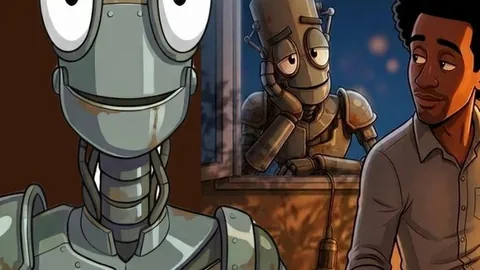
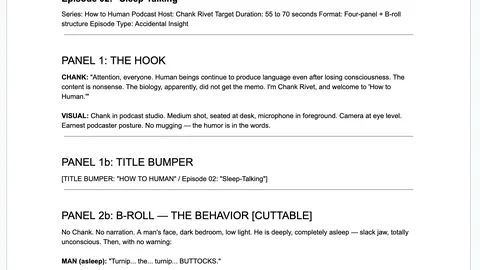

Two story worlds in progress.
Frogtechnium is an alternate-evolution world where amphibian-derived people live among a small human population as kin. Water is rising, forests are cooling, and roads are breaking.
How to Human is set in Chank’s studio, where a machine gets us wrong in ways that show how strange we are. I built both worlds with the eye that made the frog and insect photographs further down this page.
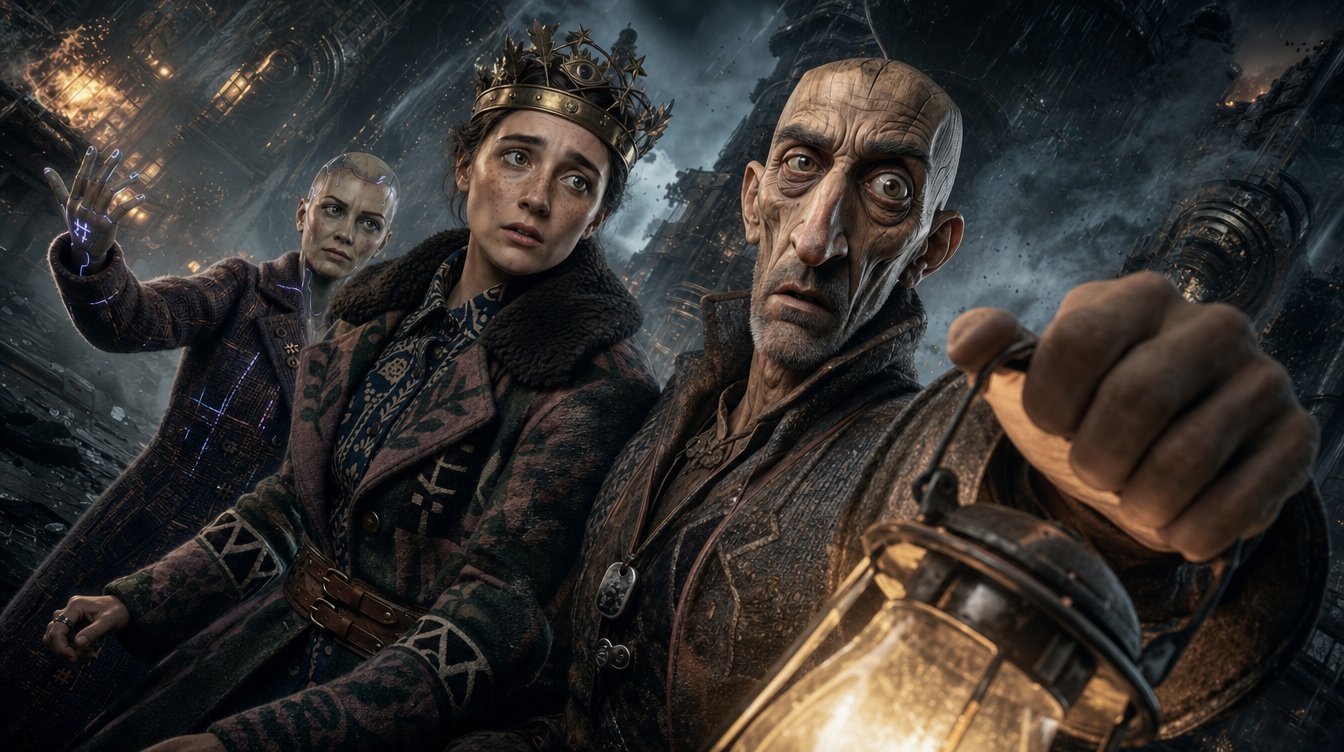
Travelers in the ruins at duskFrogtechnium · clip 0:15
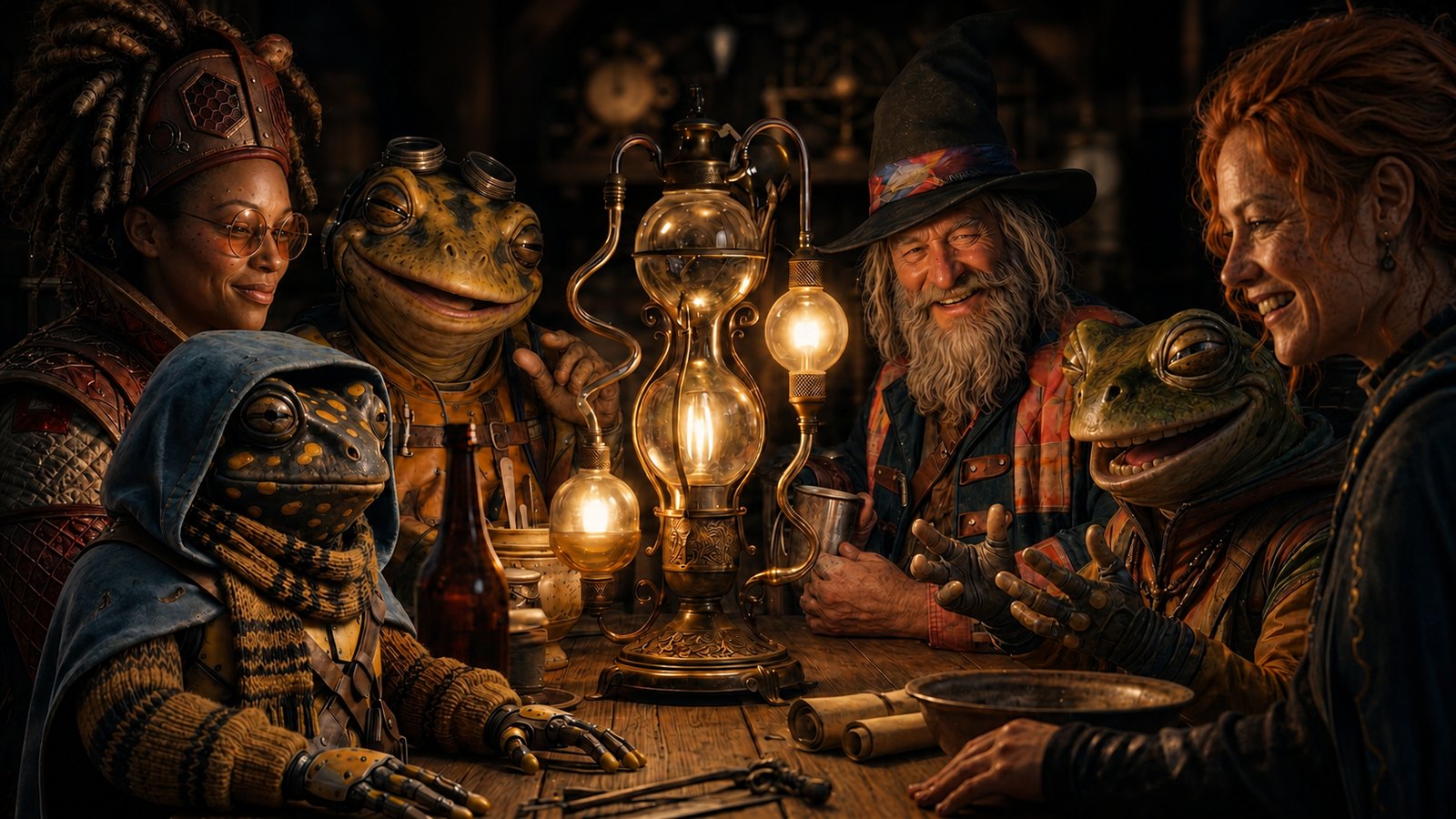
Gathered at the long tableFrogtechnium · still
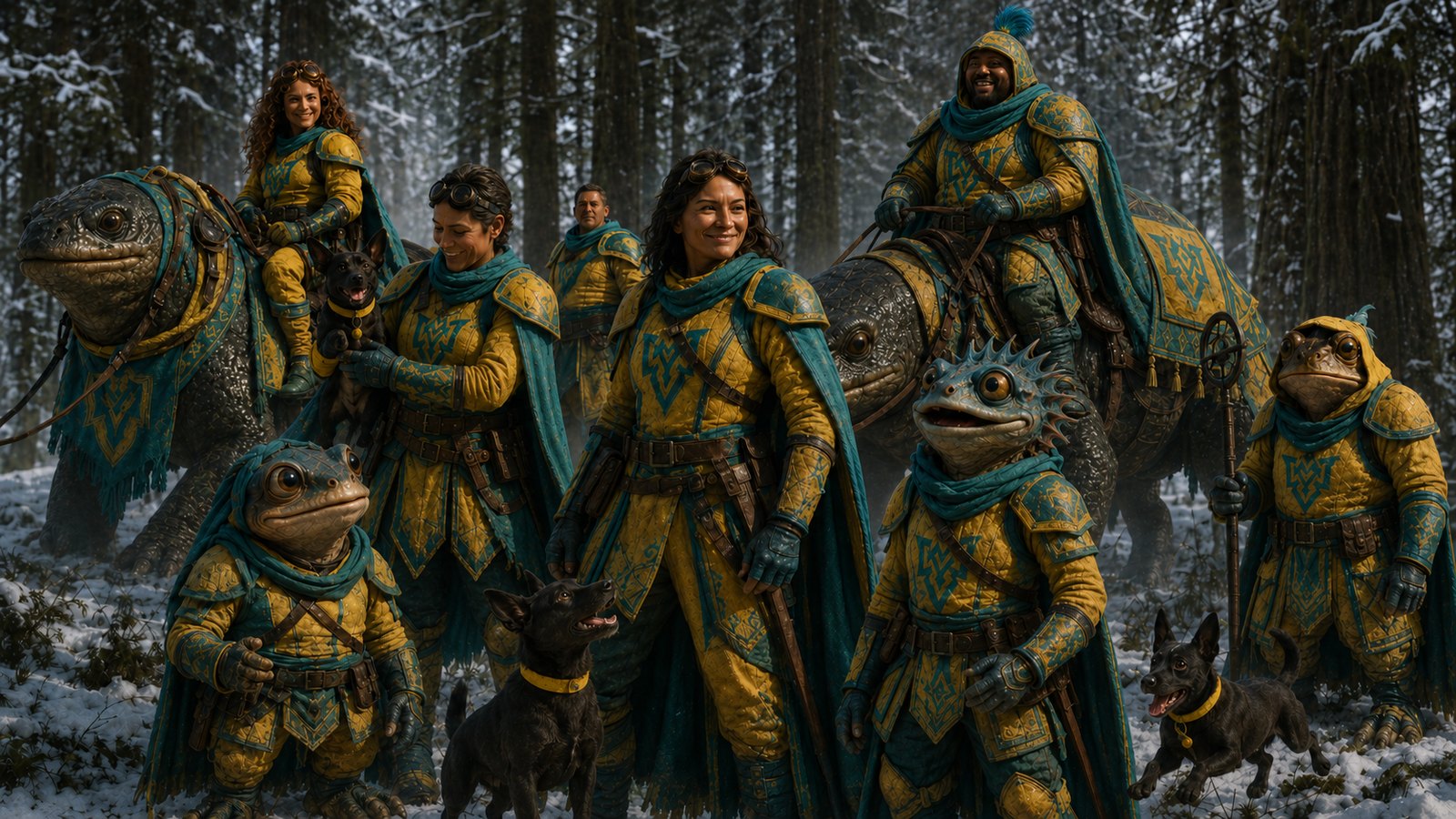
Group portrait in the snow forestFrogtechnium · clip 0:10
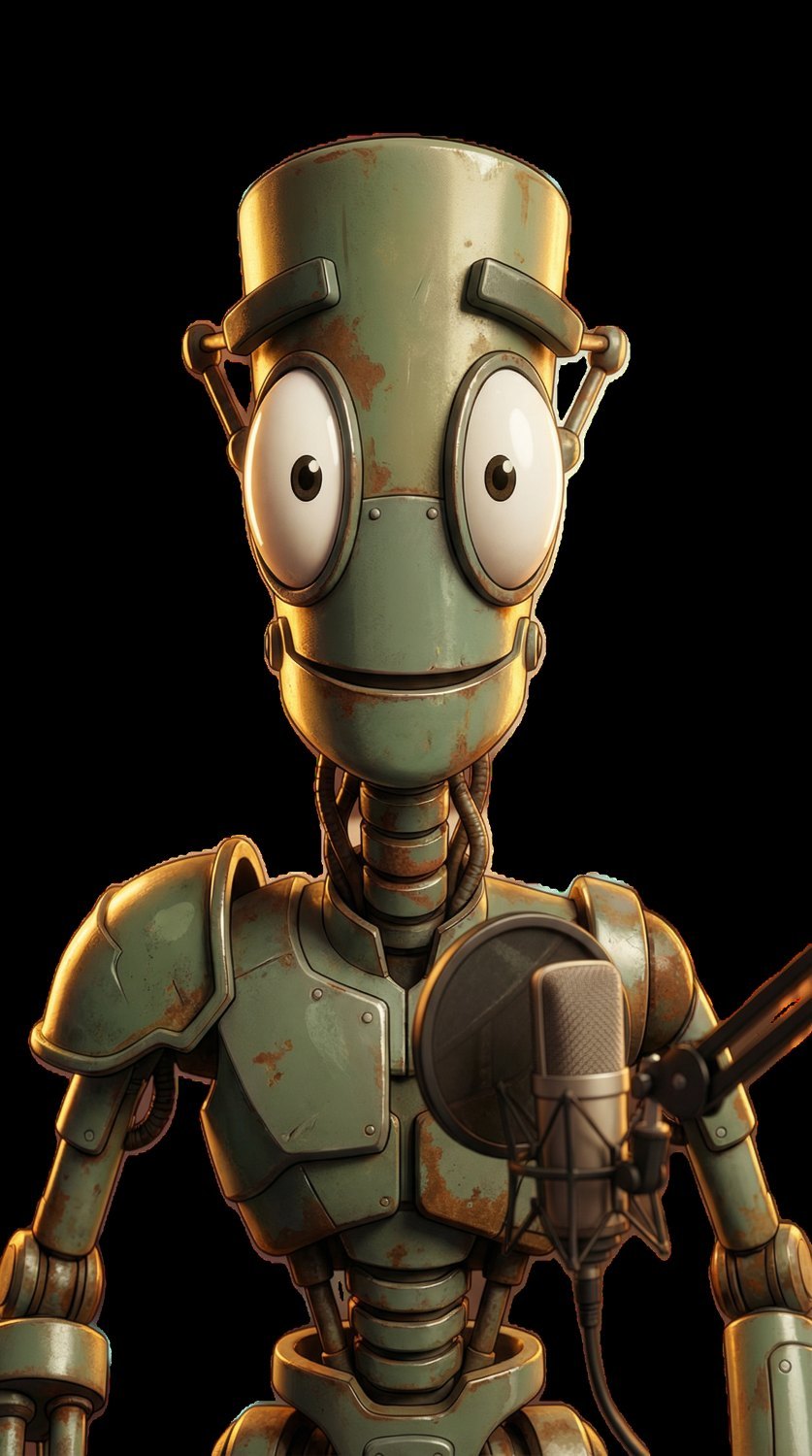
Chank RivetHow to Human · host

TravelersFrogtechnium · clip 0:10
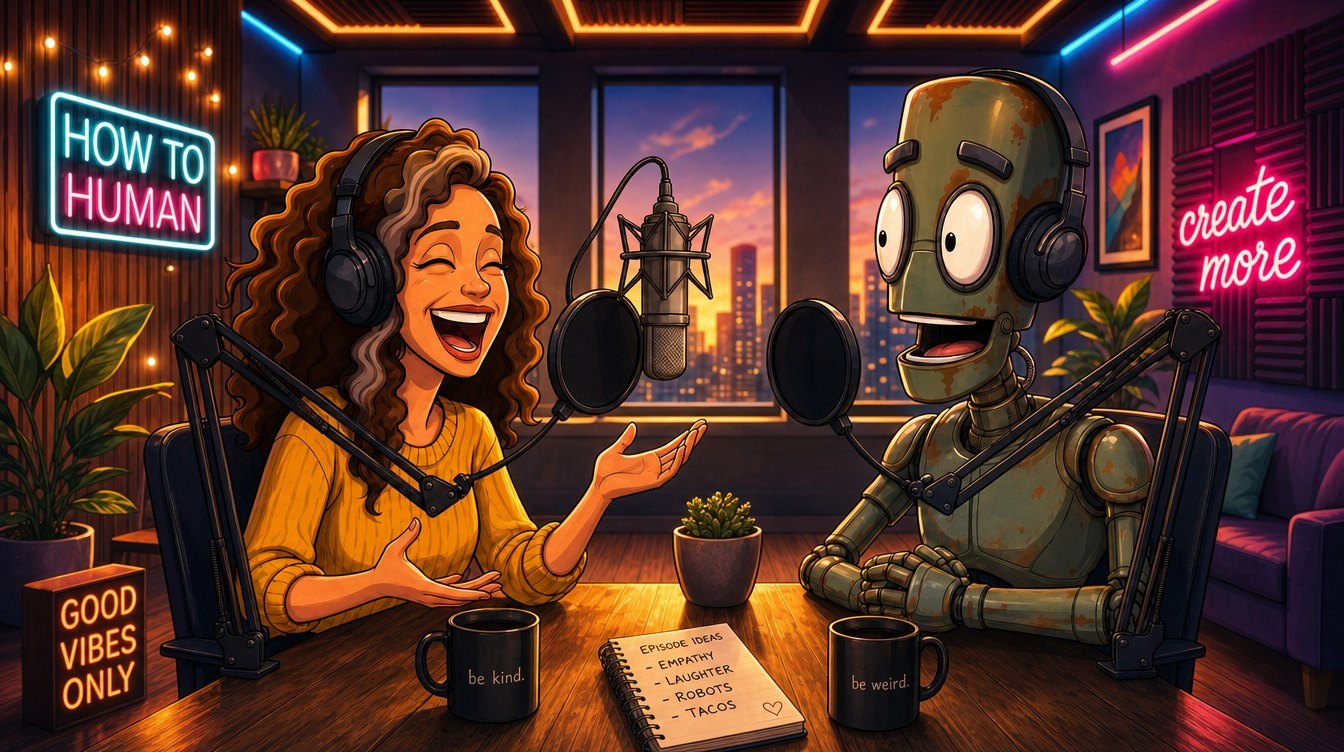
The studioHow to Human · still
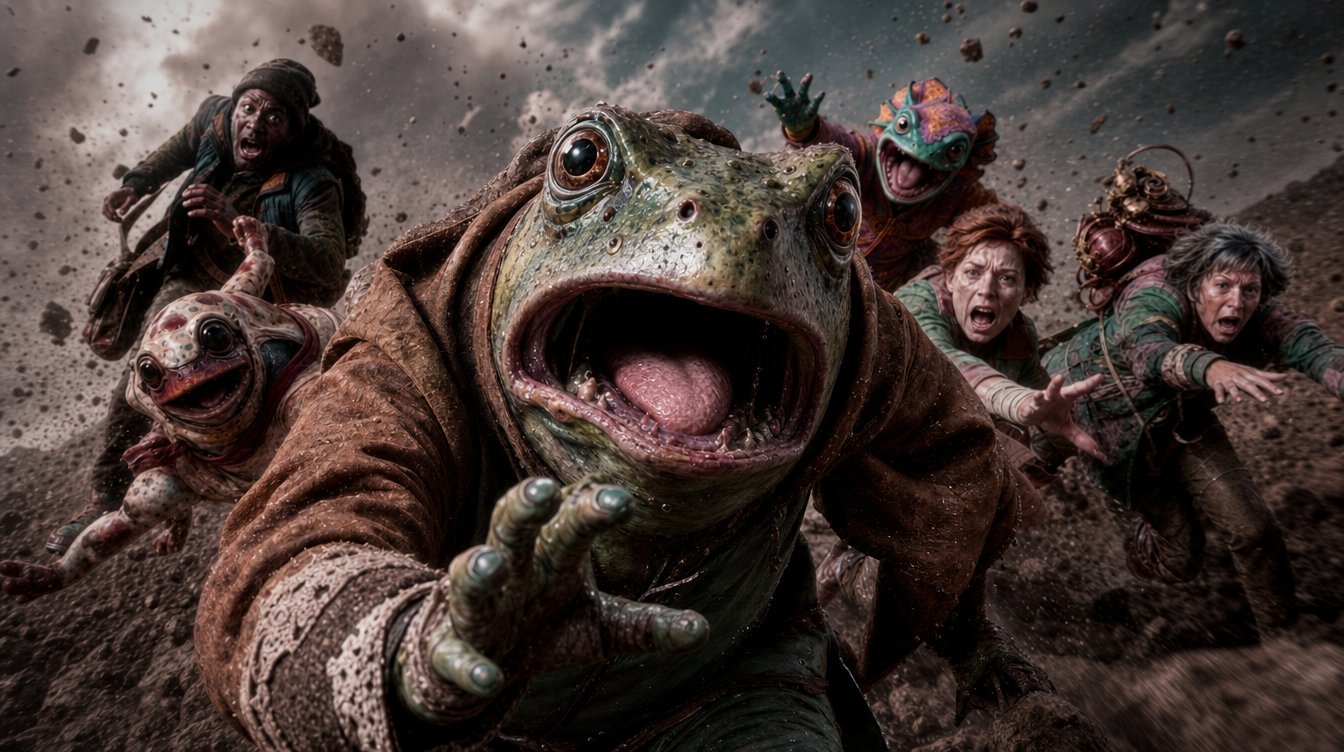
Mad scrambleFrogtechnium · clip 0:15
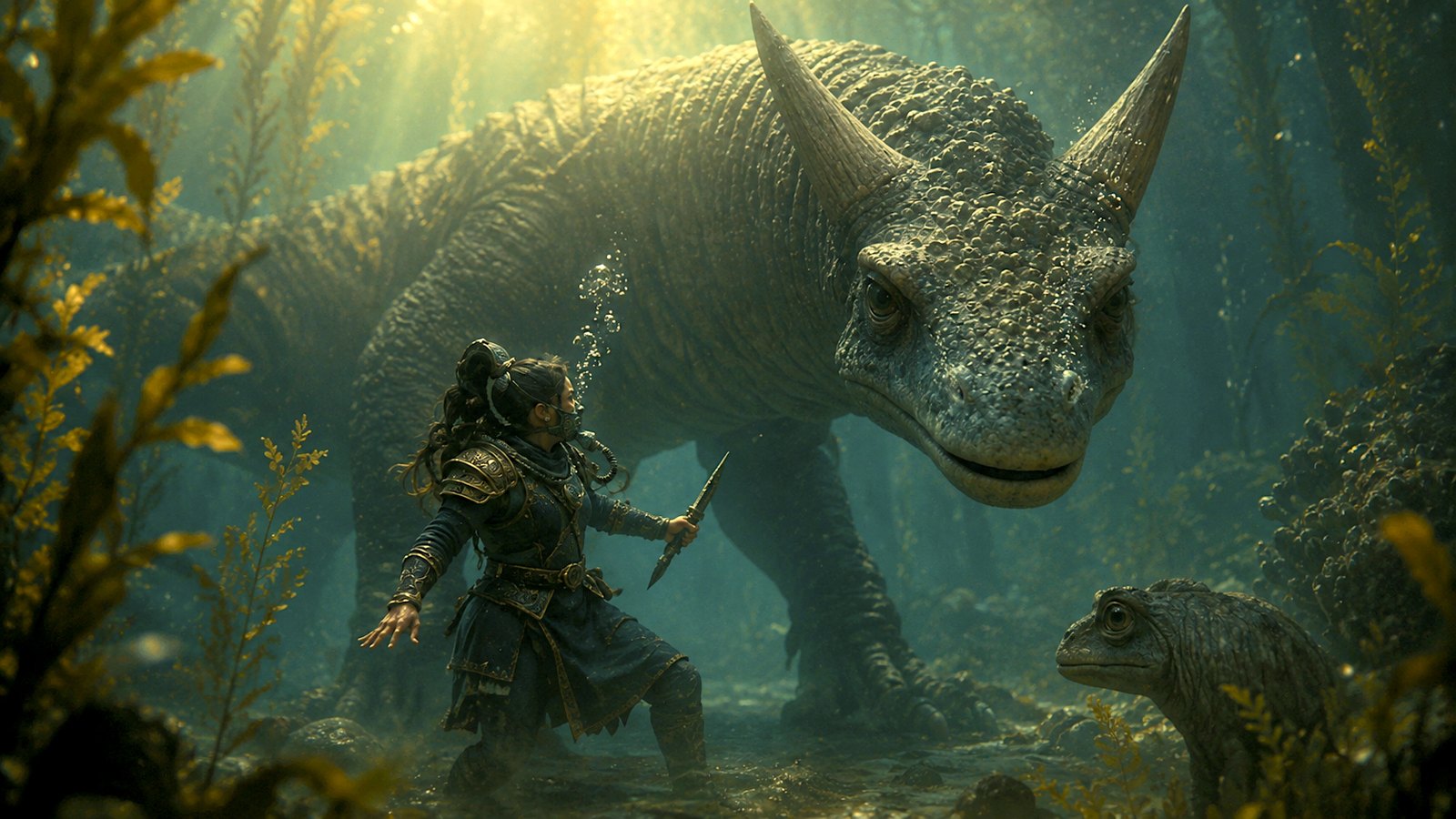
A horned creature in the reedsFrogtechnium · still
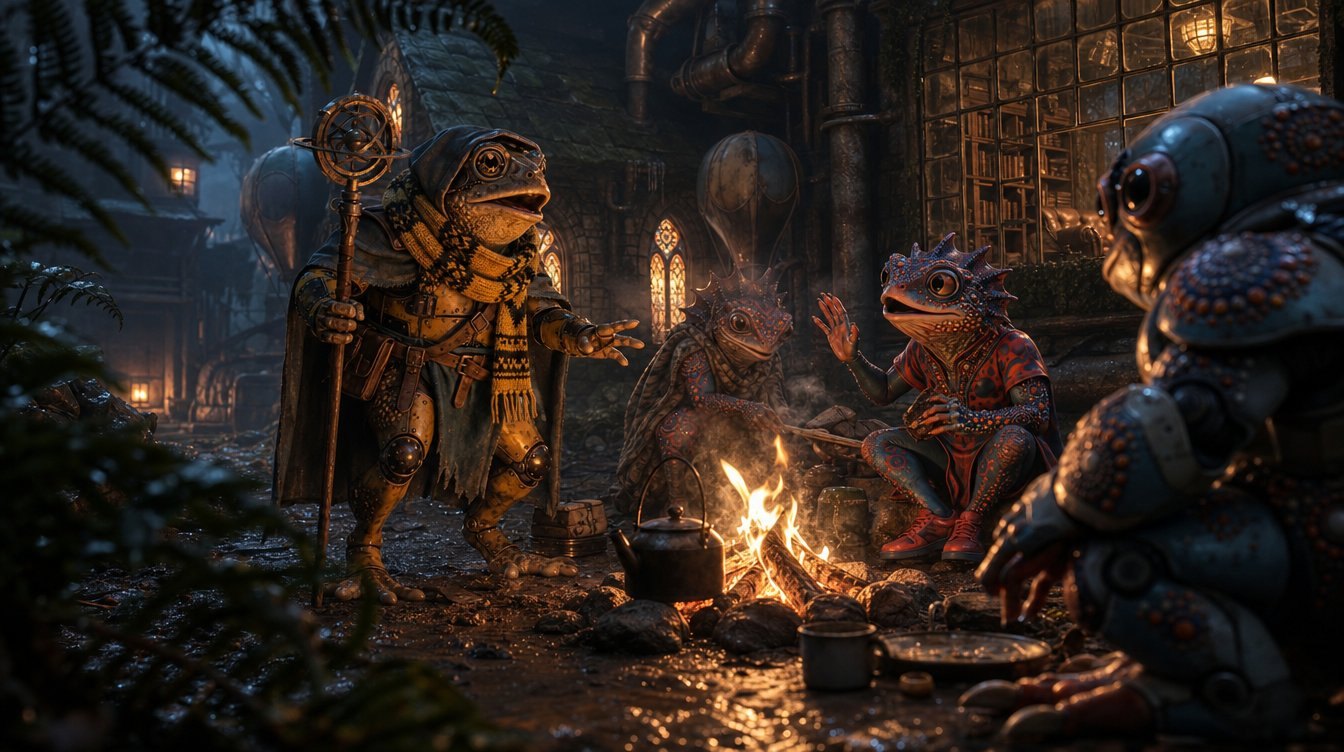
CampsiteFrogtechnium · clip 1:15
Each world has a deeper room. The Frogtechnium room holds a grid of stills, eight motion clips, and the 65-page world bible. The How to Human room walks through the making of Episode 01, one movement at a time.




The bench · Methods and evidence
How the work gets made.
Generative tools made images and video fast and cheap to produce. Choosing the right result still takes trained judgment. Each row below names a method I use to direct the tools and shows the evidence beside it.
Brief before render
I write the plan before I open a tool. For How to Human, a four-panel script sets the hook, the misreading, and the Turn, and the shot notes mark which beats can be cut. Larger pieces get a full bible. The Parade of Worlds bible runs ten pages for twenty-four mechanical animals and one song, from motion rules to the working loop.
Read the Parade of Worlds bible (PDF, 2 MB)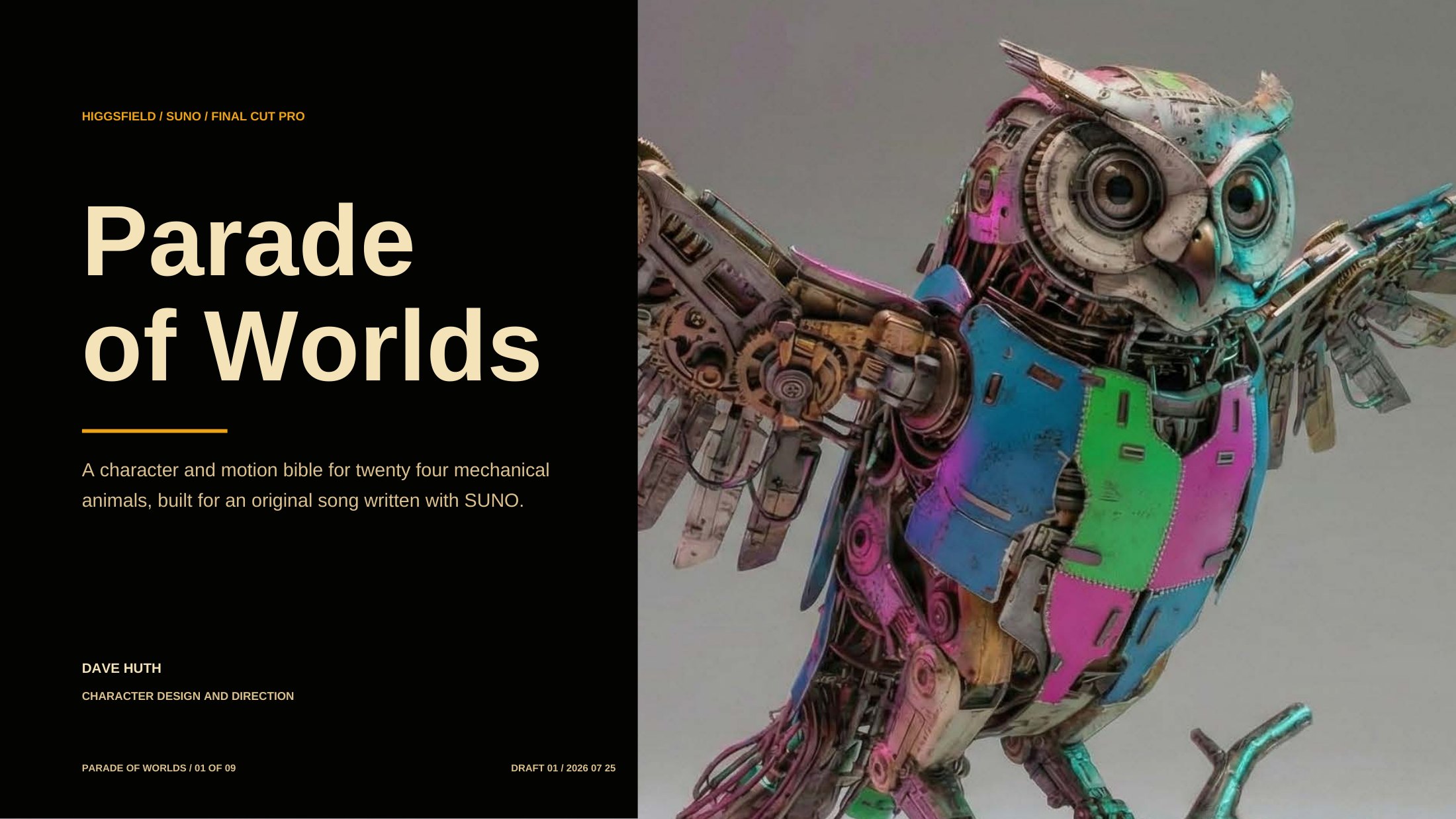
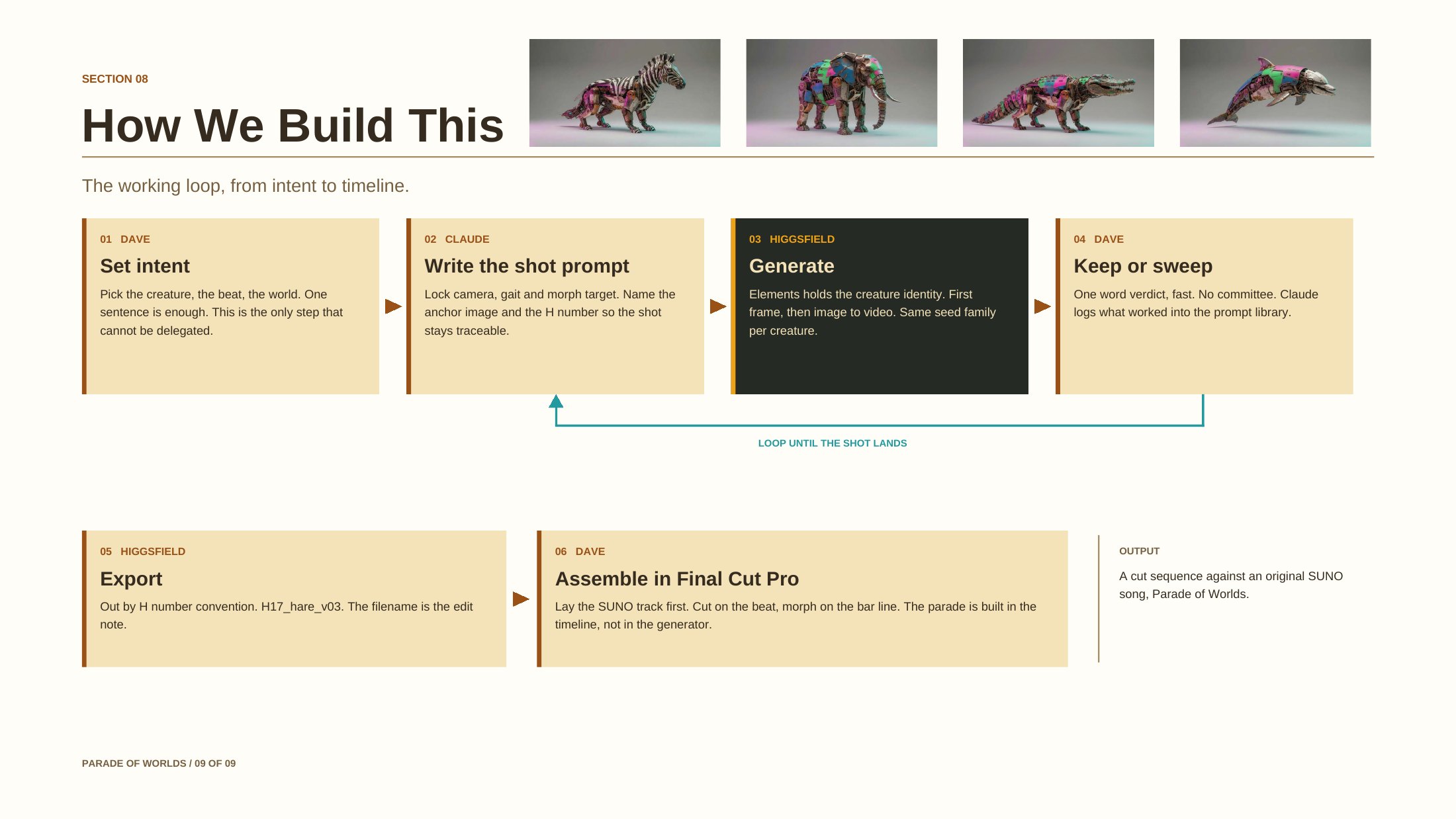
Holding a character steady
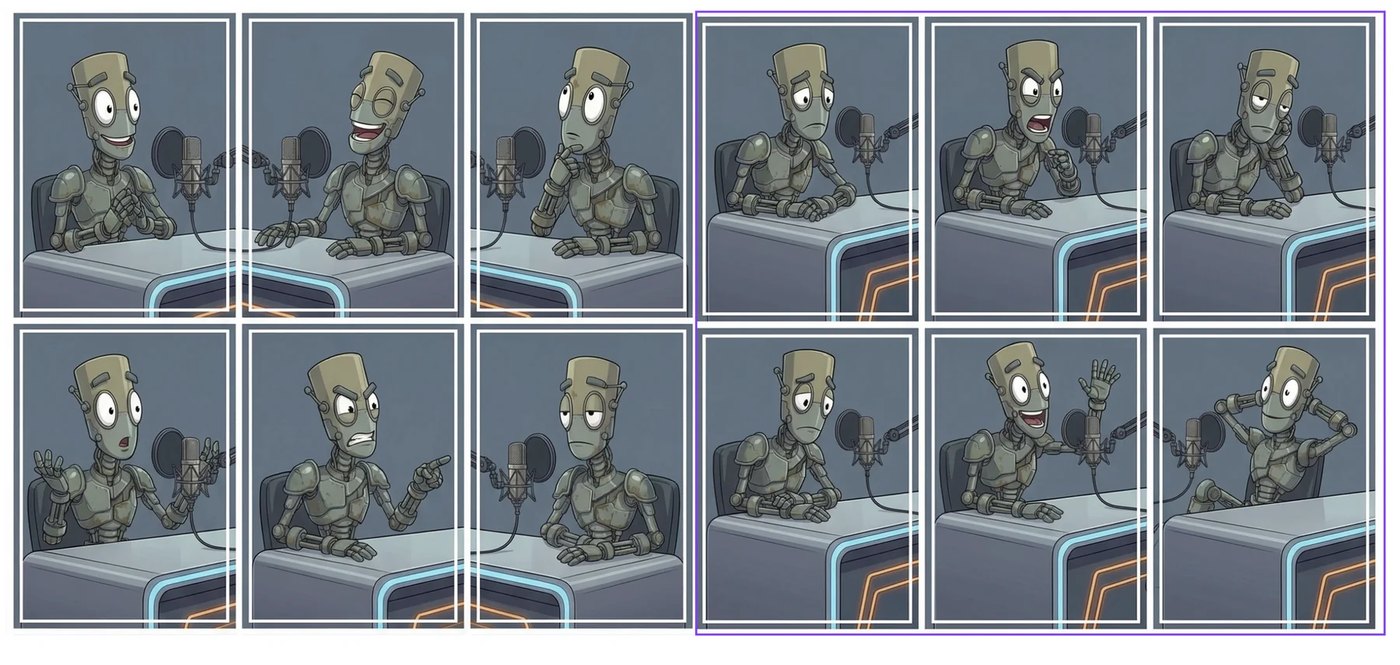
A turnaround, a color specification with named swatches, and an expression library keep Chank the same robot across every tool and every shot. The bible outlives each model update.
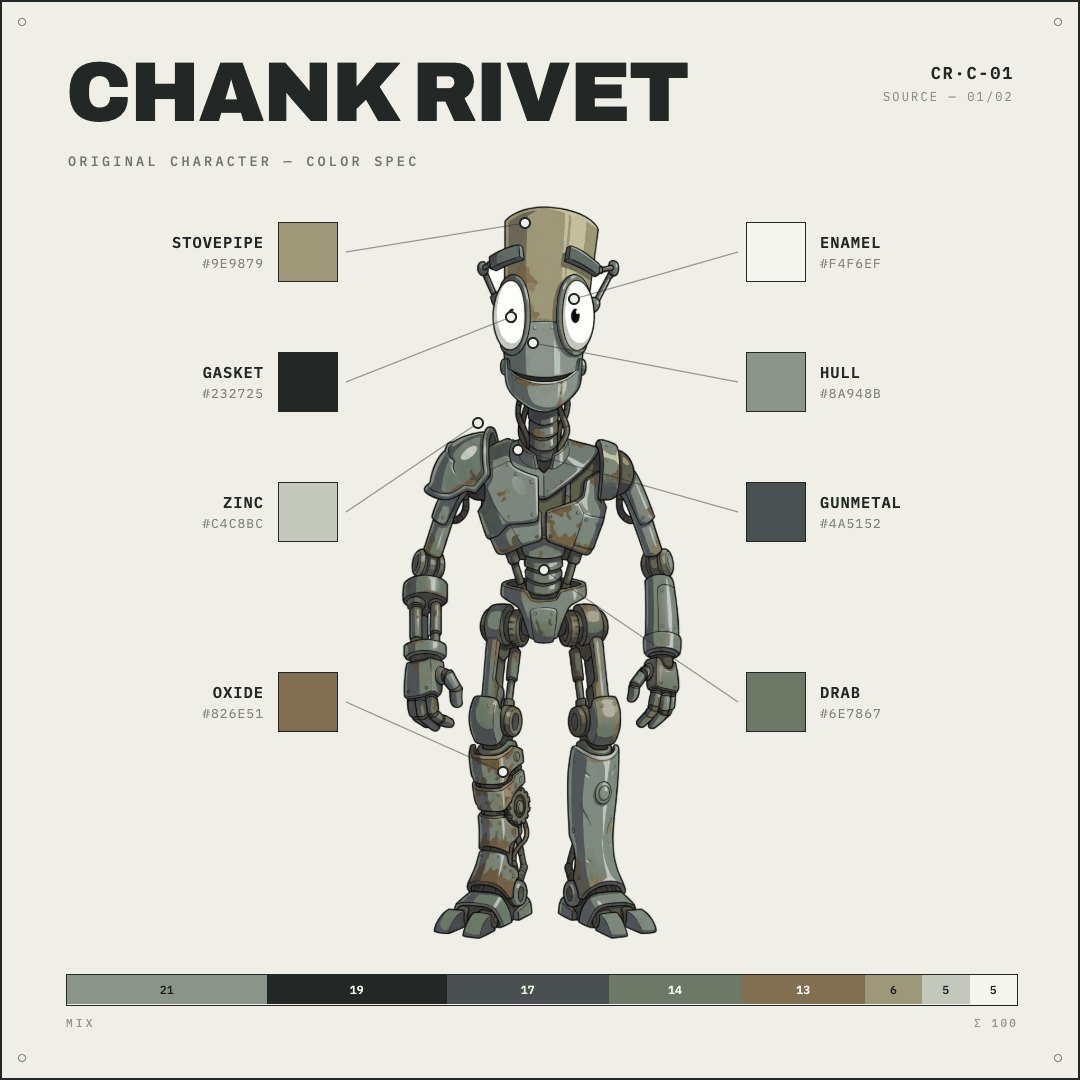
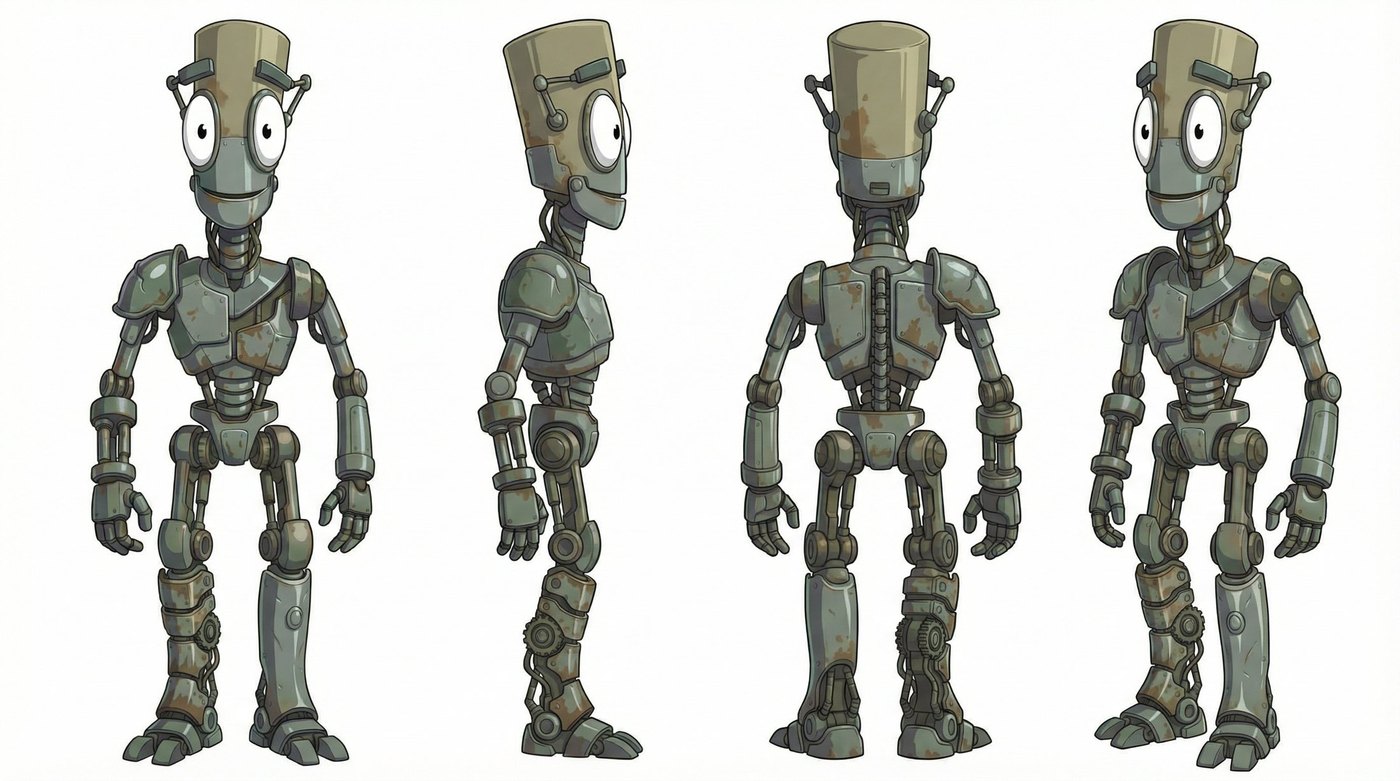
Choosing the keeper
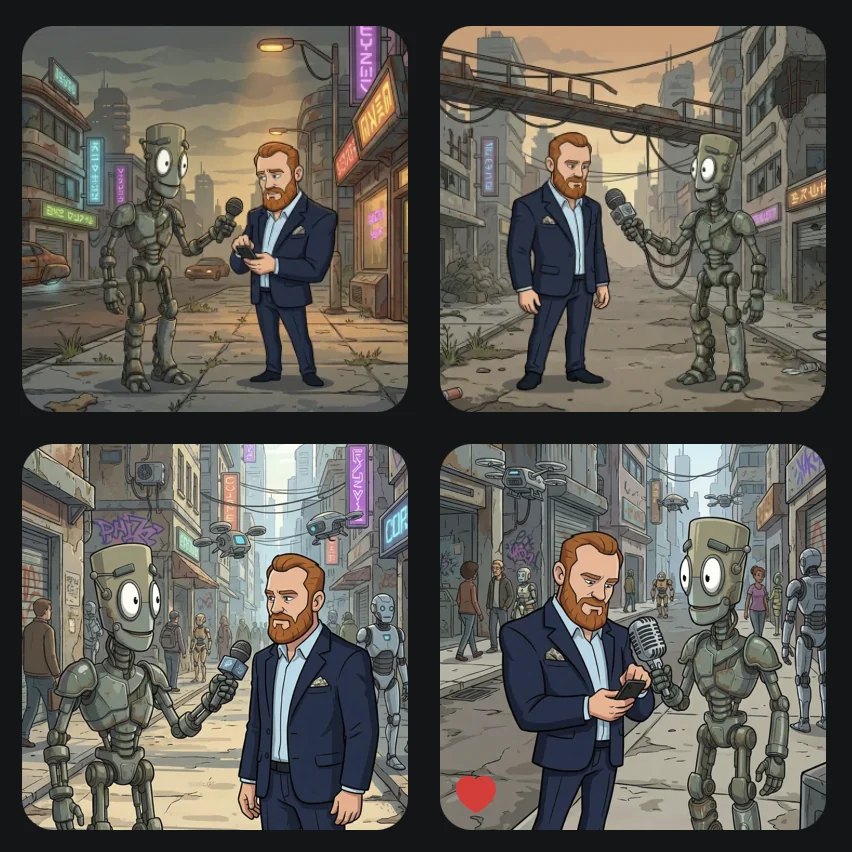
I generate each beat as a roll of takes, and most of them are wrong in useful ways: an eyeline, a silhouette, a gesture pushed too far. A library of twelve expressions and nine camera studies gives me a range to choose from. I pick the keeper and can say why it beat the others.
The reference override guard
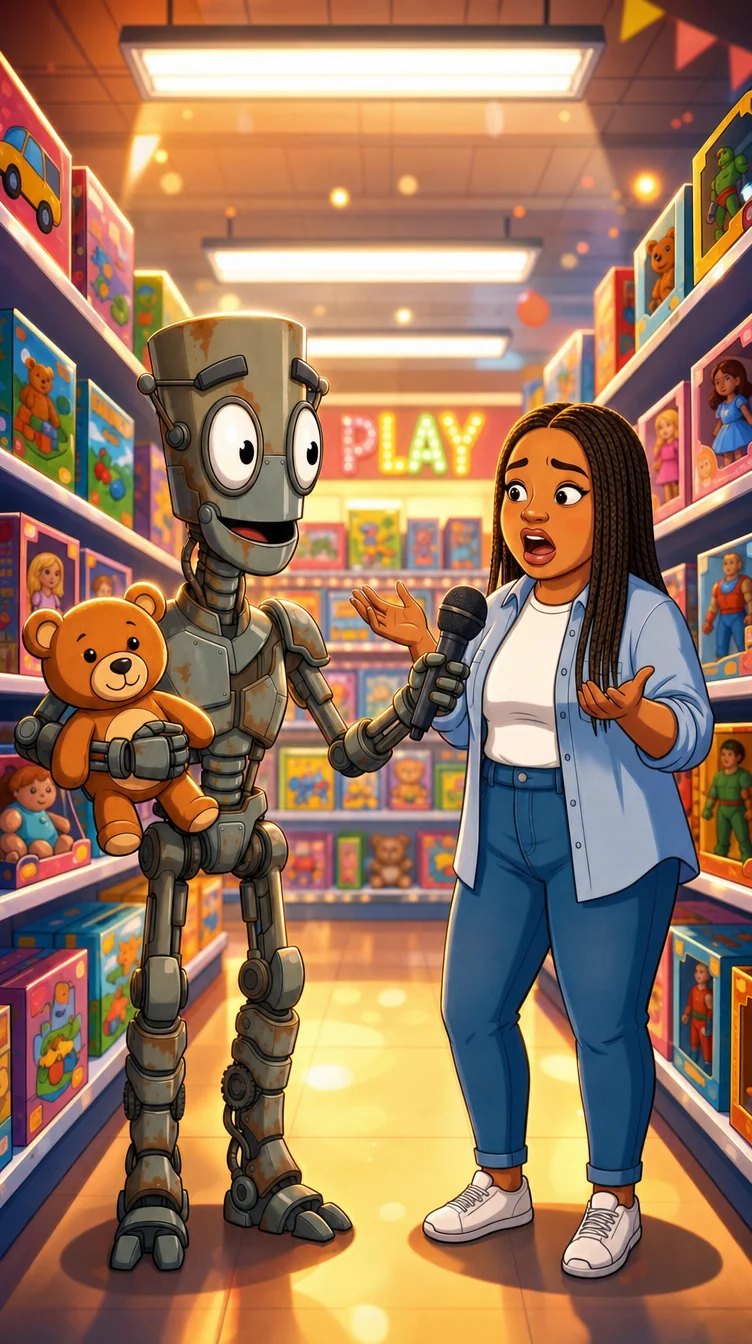
When an image reference and a written instruction disagree, the reference usually wins. My fix is one line added to every prompt: the text wins any contradiction, and anything the text forbids counts as absent from the reference, even when it’s plainly visible. I added that line to my production rules after a documented failure. Every roll since then has come back clean, four out of four.
The wrongness test
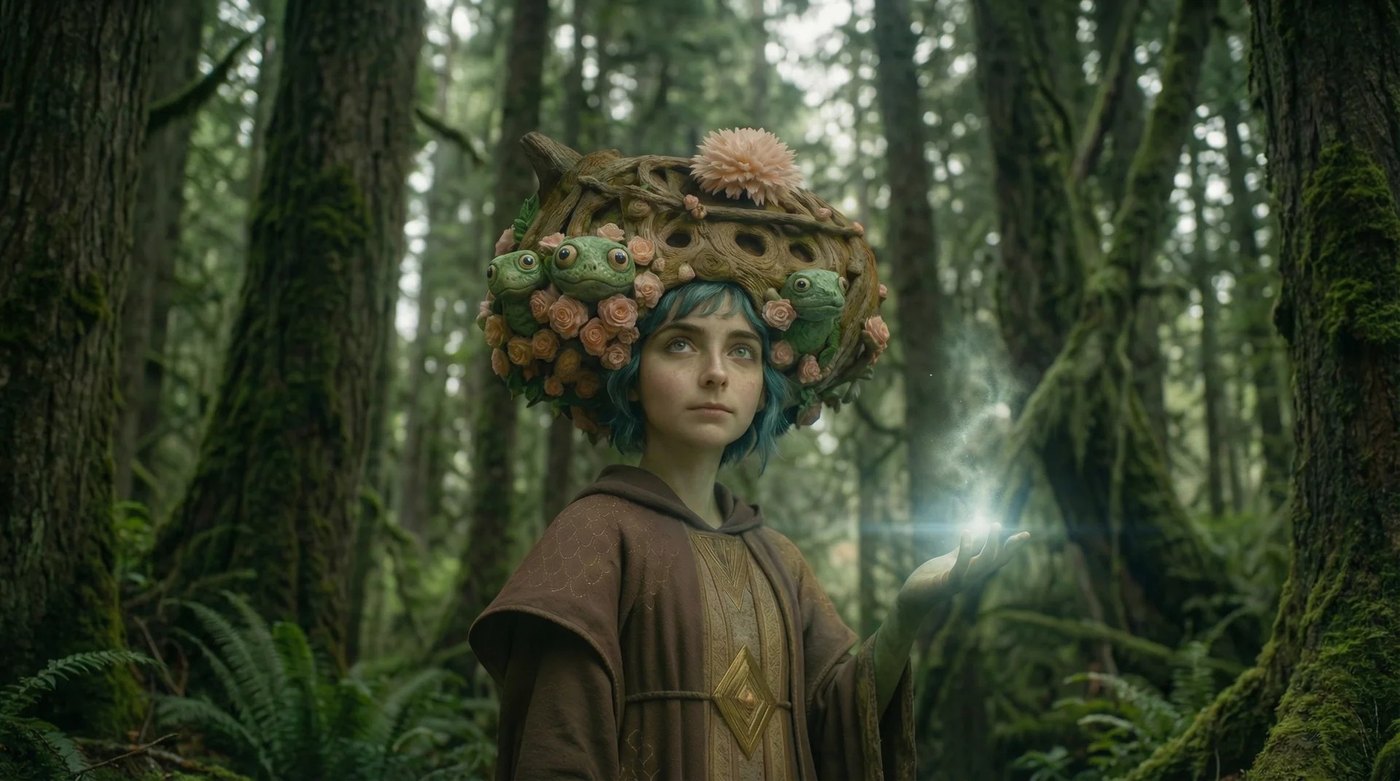
Sometimes four technically clean takes lose to one that feels alive. I’m looking for a slight twist on the familiar, the kind of wrongness that makes a frame feel right. The timing comes from comic strips like Pogo and Calvin and Hobbes, and the strangeness comes from pop surrealism. I carry both into photographic images instead of drawn ones.
The assembly
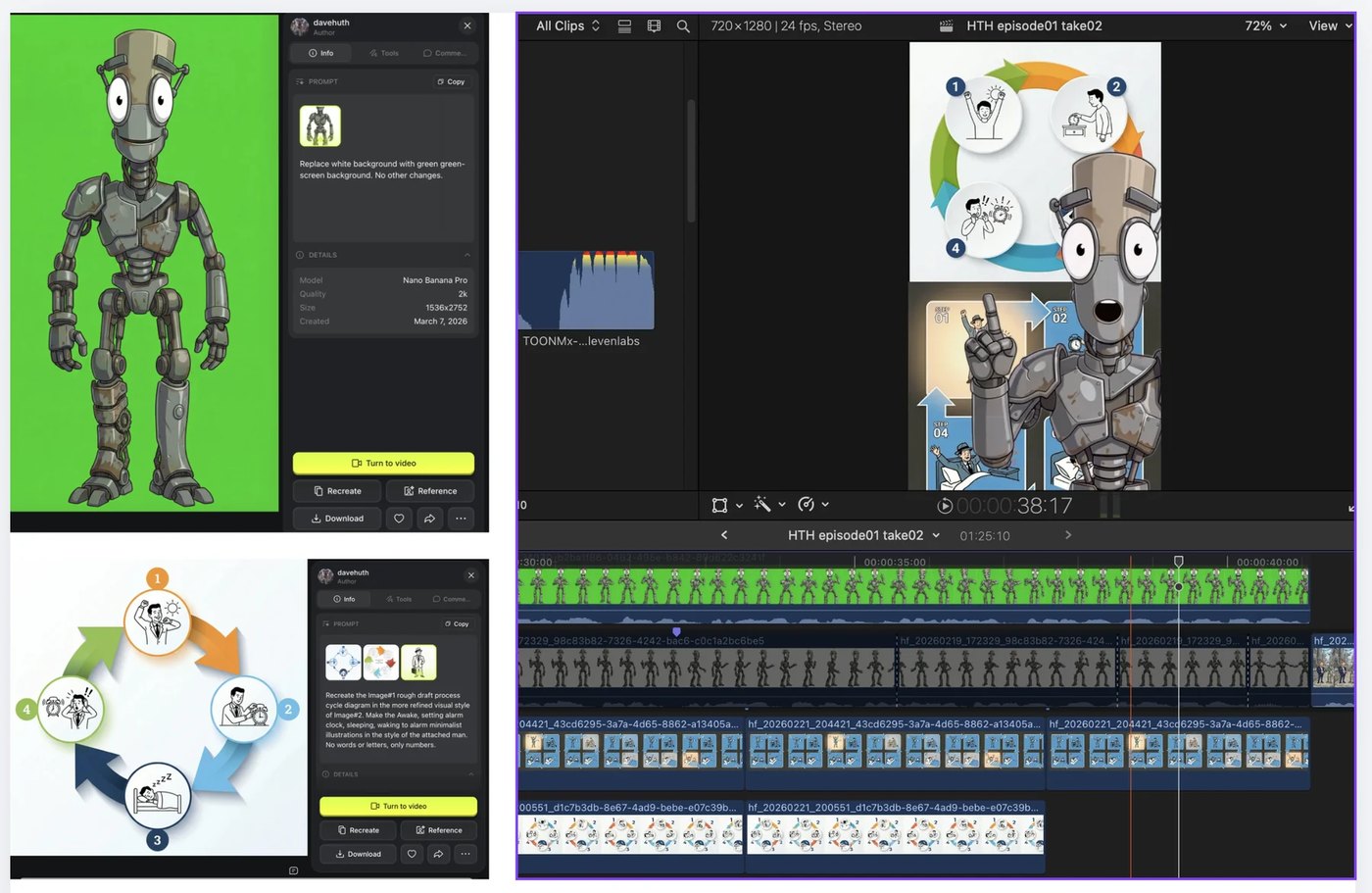
Dozens of generated clips, green-screen pulls, and voice tracks come together on one timeline in Final Cut Pro. I build the composites the same way I make the frames, with a written instruction first and a check of the result after.
Written visual law
This design system began as measurements taken from my own work. I checked it with readers in blind tests, and now I hand it to AI collaborators as a written specification. It sets three typefaces with strict jobs, a palette with contrast tables, and a budget for accent color. This site follows it.
How this site was madeA person at every decision
My research sweeps, daily brief, and render pipelines run on written specifications, and each one stops wherever a person has to decide. The automation gathers and sorts, and I make every call that shapes the work.
- Career sweep · daily · reads the job boards and flags at most one opening that passes both written tests
- Morning brief · daily 04:00 · weather, field notes, open decisions, one page
- Render loop · per shot · brief, prompt, generate, keep or sweep, then the cut
- Site build · this page · a brief, a feeling curve, one peak, then verification by screenshot
The Understory is my notebook of fragments, tests, and useful mistakes. Each of its seven entries records a decision while I was still making it.
Deeper room · The Understory Open the notebook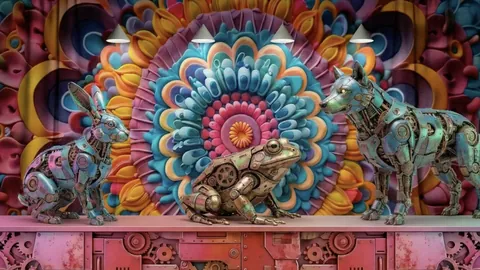


Photography trained this eye first.
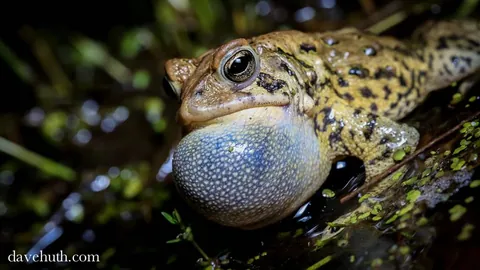
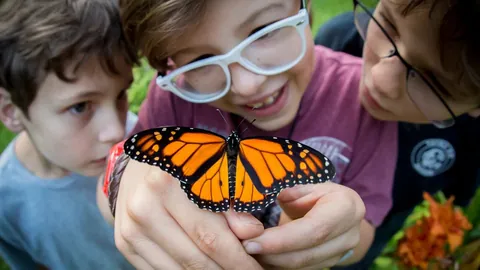
For more than ten years I photographed frogs, salamanders, and arthropods for conservation clients, long before generative tools existed. I shoot low and close, at the animal’s eye level, because that’s where a viewer starts to feel empathy. Two field guides and a poster series carry the work into print.

The record.
These are the short facts, in the order they happened. Write to me for a full resume with dates and institutions.
- Training
- I studied illustration as an undergraduate, working in brush, graphite, and paint. My MFA is in computer graphics and narrative digital video.
- Photography
- I’ve made close-up conservation photographs of amphibians and arthropods for more than ten years. I co-wrote and photographed Field Guide to the Amphibians of South Carolina, and I was lead designer of Amphibians of Costa Rica: A Field Guide.
- Teaching
- I’ve taught visual communication at the college and graduate level for twenty years, and I teach online now. My current courses include Effective Information Design and Social Media Marketing.
- Now
- I direct story worlds built with generative AI. How to Human has three finished episodes, with more in production. The Frogtechnium world bible is in its first draft, at sixty-five pages.
- Tools
- Higgsfield, GPT Image, Gemini, Final Cut Pro, Photoshop, InDesign, Canva, and Claude. I still draw with graphite and Prismacolor on paper.
- Base
- Rochester, New York. I work remotely and can travel when a project needs it.


The door · Field station · Rochester, New York
Write to Dave.
I’m looking for a studio that holds generative AI work to a high standard, both aesthetic and ethical. I prefer small teams. Bring me a hard problem.
davehuth.com · Built to the Huth Standard · September 2026